
Lilly
How to Keep Guests Happy at a Food Truck Event
A successful food truck event is about more than serving good food. Guests also notice how easy it is to order, how long they wait, whether the menu offers enough choices, and how comfortable the overall event feels.
Creating a positive food truck guest experience requires planning before the event and good coordination during service. From choosing the right vendors to organizing lines and communicating menus, small improvements can make a major difference.
Whether you are planning a company gathering, community festival, school event, private party, or public food truck event, these strategies can help keep guests satisfied.
Choose the Right Food Truck Vendors
The guest experience starts with selecting the right vendors.
When choosing a food truck catering service, consider the type of event, expected attendance, menu preferences, service capacity, and dietary requirements.
Before booking, ask:
How many guests can the truck serve?
What is the expected service time?
Does the menu offer different choices?
Are vegetarian or halal options available?
Does the vendor have experience with large events?
What setup space is required?
Does the vendor provide its own serving equipment?
Choosing vendors that match the event size can help prevent long lines and service delays.
Plan the Menu Around Your Guests
Guests are more likely to enjoy an event when they have food choices that match their preferences.
Depending on the audience, organizers may consider:
Taco food trucks
Food truck burgers
BBQ food trucks
Indian food truck options
Food truck halal options
Dessert food trucks
A diverse menu can be especially useful for large food truck catering events where guests have different tastes.
However, variety should not make ordering complicated. Clear menus and simple descriptions can help guests make decisions quickly.
Reduce Long Lines
Long waiting times are one of the biggest challenges at busy food truck events.
To improve the experience, organizers can:
Use multiple food trucks
Separate trucks by menu type
Provide visible menus before guests reach the truck
Stagger meal times
Create clear waiting areas
Estimate service capacity before booking
For larger event food trucks setups, multiple vendors can distribute demand and give guests more choices.
The goal is not simply to have more trucks. The number of vendors should match the guest count and available serving time.
Make Menus Easy to Understand
Guests should be able to understand the menu before reaching the ordering window.
Use clear signs showing:
Main dishes
Prices
Vegetarian choices
Halal options
Popular items
Meal combinations
Dessert choices
For example, a taco food truck can display its main taco options and toppings clearly rather than requiring every guest to ask questions at the window.
Simple menus can help speed up ordering and improve the overall guest experience.
Offer Different Food Options
Not every guest will want the same type of meal.
A well-planned event can include different food concepts depending on the audience.
For example, organizers could combine:
Taco food trucks for Mexican-style meals
Food truck burgers for classic options
An Indian food truck for additional variety
BBQ food trucks for outdoor gatherings
A dessert food truck for sweet options
This can make the event more inclusive while giving guests the opportunity to choose what they prefer.
Consider Dietary Requirements
Dietary needs should be discussed with food vendors before the event.
For diverse audiences, a food truck halal option may be important. Organizers can also ask about vegetarian meals, allergens, and other dietary restrictions.
Useful steps include:
Ask vendors about ingredients.
Identify suitable menu items.
Clearly label dietary options.
Communicate available choices before the event.
Keep menus updated if ingredients change.
Clear information helps guests make informed choices without creating confusion at the serving window.
Provide Comfortable Waiting Areas
Guests should have enough space to wait without blocking other event activities.
Depending on the venue, organizers can provide:
Clearly marked queues
Shade
Seating
Tables
Trash containers
Signs
Open walking areas
For outdoor events, seating should ideally be positioned close enough to the food trucks for convenience without creating congestion around the serving area.
Create a Smooth Guest Flow
Good logistics for event planning can make food service much easier.
Think about the guest journey from beginning to end:
Arrival → Menu → Queue → Ordering → Food Pickup → Seating → Cleanup
Each stage should be easy to understand.
Place menus where guests can see them before joining the line. Keep pickup areas clear and make sure seating does not interfere with people waiting to order.
This simple approach can reduce confusion during busy periods.
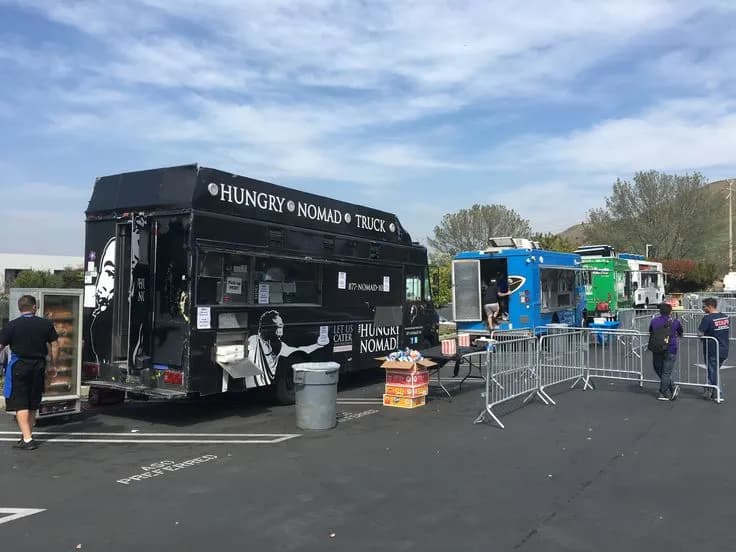
Use Multiple Food Trucks for Larger Events
Large events may require multiple food trucks for hire.
Using several vendors can help distribute guests across different menus.
For example:
Truck 1: Tacos
Truck 2: Burgers
Truck 3: Indian food
Truck 4: Desserts
This gives guests more options while spreading demand across the event.
When booking multiple food trucks to hire for events, make sure the venue has enough space for parking, queues, seating, and vendor setup.
Communicate the Food Schedule
Guests should know when and where food will be available.
For planned events, share:
Food truck names
Menu information
Serving times
Location
Payment options
Dietary choices
Event schedule
If food trucks are arriving at different times, communicate the schedule clearly so guests know what to expect.
Good communication can improve the experience before guests even reach the food truck.
Make Payment Simple
Slow or confusing payment processes can increase waiting times.
Before the event, confirm which payment methods each vendor accepts.
If vendors accept digital payments, cards, or cash, consider displaying payment information clearly.
For large events, organizers can also communicate payment options in advance.
The easier it is for guests to order and pay, the smoother the food service can become.
Keep the Event Area Clean
Clean surroundings contribute to a positive guest experience.
Place trash and recycling bins near the food service area without putting them directly in the ordering queue.
During larger food truck events DC or community gatherings, organizers should assign staff or volunteers to monitor high-traffic areas and keep the venue clean.
Food trucks should also understand the venue's cleanup expectations before the event.
Add a Comfortable Seating Area
Not every guest will eat immediately after receiving their food.
Provide enough seating for the expected crowd where possible.
Depending on the venue, seating may include:
Picnic tables
Outdoor tables
Benches
Chairs
Standing tables
Shaded areas
For corporate and community events, comfortable seating also encourages guests to stay longer and interact with others.
Use Food Trucks as Part of the Event Experience
A food truck can be more than a place to order a meal.
Its visual appearance, menu presentation, staff interaction, and setup can all contribute to the event atmosphere.
Organizers can make food service part of the event by coordinating:
Event signage
Food truck placement
Menu displays
Seating
Music
Photography areas
Social media promotion
This is particularly useful when food is one of the main attractions.
Promote the Food Truck Event Beforehand
Effective food truck marketing can help guests know what to expect before arriving.
Promotion can include:
Social media posts
Email announcements
Event websites
Community groups
Flyers
Digital invitations
Share information about the participating vendors and menu options when possible.
For larger events, food truck marketing strategies can also highlight special menu items and event activities to build interest.
Consider Local Food Truck Options
Local vendor selection can be useful for organizations planning events in the DMV area.
Depending on the location, organizers may search for DC food trucks, food trucks in DC, food trucks in Arlington VA, food trucks in Alexandria VA, or food trucks Fairfax VA.
Events in Maryland can also consider food trucks in Maryland.
Local vendors may already be familiar with common event logistics and venue requirements in the area.
Ask Guests for Feedback
After the event, ask guests what worked and what could be improved.
Useful feedback questions include:
Was the food easy to access?
Were the lines reasonable?
Did guests have enough choices?
Was the menu easy to understand?
Were dietary options available?
Was seating comfortable?
Did guests enjoy the overall experience?
This feedback can help improve future events and vendor planning.
Food Truck Guest Experience Checklist
Before the event, confirm:
Appropriate food truck vendors
Guest count
Menu variety
Dietary options
Service capacity
Number of trucks
Queue layout
Seating
Signage
Payment options
Trash and recycling
Vendor arrival time
Event schedule
Weather plan
Guest communication
Final Thoughts
A great food truck guest experience depends on more than the quality of the food. Guests also need convenient ordering, reasonable wait times, clear menus, comfortable seating, and easy-to-follow event logistics.
By selecting the right food truck catering service, planning the menu carefully, organizing guest flow, providing dietary choices, and communicating clearly, event organizers can create a smoother and more enjoyable experience.
Whether you are arranging a small private gathering or a large community event, thoughtful planning can help guests spend less time waiting and more time enjoying the food and event.