
Lilly
Should You Offer Free Food or Paid Food at a Community Event?
Planning food for a community event involves more than choosing a menu. Organizers also need to decide who will pay for the food, how much food is needed, and what type of service will work best for the crowd.
For a food truck community event, there are two common approaches: providing food at no cost to attendees or allowing guests to purchase their own meals. Both options can work depending on the event budget, audience, schedule, and goals.
Free vs. Paid Food: What’s the Difference?
Free food means the event organizer, sponsor, business, or community organization covers the cost of meals for attendees. Guests can typically visit the food service area and receive food without paying at the point of service.
With paid food, attendees purchase their own meals directly from participating vendors. This can reduce the organizer's food budget while giving guests more control over what they want to eat.
There is also a third option: a partially sponsored food program. An organizer can cover part of the cost while guests pay for additional items or meals.
When Free Food Makes Sense
Free food can be useful when the goal is to make the event more welcoming and convenient for attendees.
For example, free meals may work well for:
Neighborhood celebrations
Community appreciation events
School or nonprofit gatherings
Employee and volunteer events
Sponsor-funded community programs
Public events with a dedicated food budget
The main consideration is the number of guests. Before booking a food truck catering service, organizers should estimate attendance and determine whether the budget can cover the expected demand.
A clear headcount can help prevent both food shortages and unnecessary spending.
When Paid Food Works Better
Paid food can be a practical choice when an event has a large or unpredictable attendance.
Instead of paying for every meal, the organizer can invite f and allow attendees to purchase what they want.
This model gives guests more flexibility. Someone may want a full meal, while another person may only want a snack or dessert.
Paid service can also work well when the event includes multiple vendors with different menus and price points.
Consider a Sponsored Food Option
Organizers do not always have to choose completely free or completely paid food.
A sponsor can cover a certain number of meals or provide meal vouchers to attendees. Once those sponsored meals are used, guests can purchase additional food themselves.
For example, a company sponsoring a community event could provide each attendee with one meal voucher. Guests could then pay separately for drinks, desserts, or additional meals.
This approach can provide a balance between attendee convenience and budget control.
Using Food Trucks at Community Events
Food trucks can provide a flexible way to serve different types of events. Event food trucks can arrive at a designated service area and prepare meals on-site, reducing the need for a traditional temporary kitchen.
Before booking vendors, organizers should consider:
Expected attendance
Event duration
Serving capacity
Available parking and vendor space
Electrical or generator requirements
Waste management
Guest dietary preferences
Vendor pricing
Local permits and regulations
For larger gatherings, multiple food trucks for hire may be needed to reduce waiting times and provide greater menu variety.
Choose Food Based on Your Audience
Menu selection can have a major impact on the attendee experience.
If the community includes guests with different dietary preferences, offering several cuisines can make the event more inclusive.
Possible options include:
Halal food trucks for guests looking for halal meals
Indian food trucks for flavorful vegetarian and non-vegetarian options
Taco food trucks for a popular Mexican-inspired menu
Burger trucks for familiar American-style meals
Dessert food trucks for sweets and snacks
For events in the Washington, DC area, organizers may also consider DC food trucks that are experienced with local events and catering requirements.
Free Food Does Not Always Mean Unlimited Food
If food is provided free of charge, organizers should still establish reasonable serving expectations.
Unlimited service can make it difficult to predict consumption, especially when attendance is high. Instead, organizers may provide a defined meal, a voucher, or a limited number of menu choices.
For example, an event could offer each attendee one meal and allow them to purchase additional food if they want something else.
This can make the food budget easier to manage while still giving guests a complimentary meal.
Paid Food Can Offer More Choice
One advantage of a paid model is that attendees can decide what they want to purchase.
For example, one person may choose tacos while another chooses an Indian meal or a dessert. With several food trucks for an event, guests can have more choices without requiring the organizer to pay for every individual meal.
This model can be particularly useful for larger community events where food preferences vary significantly.
Plan for Peak Serving Times
Even with good food vendors, long lines can affect the event experience.
Organizers should estimate when most attendees are likely to eat and plan vendor capacity accordingly.
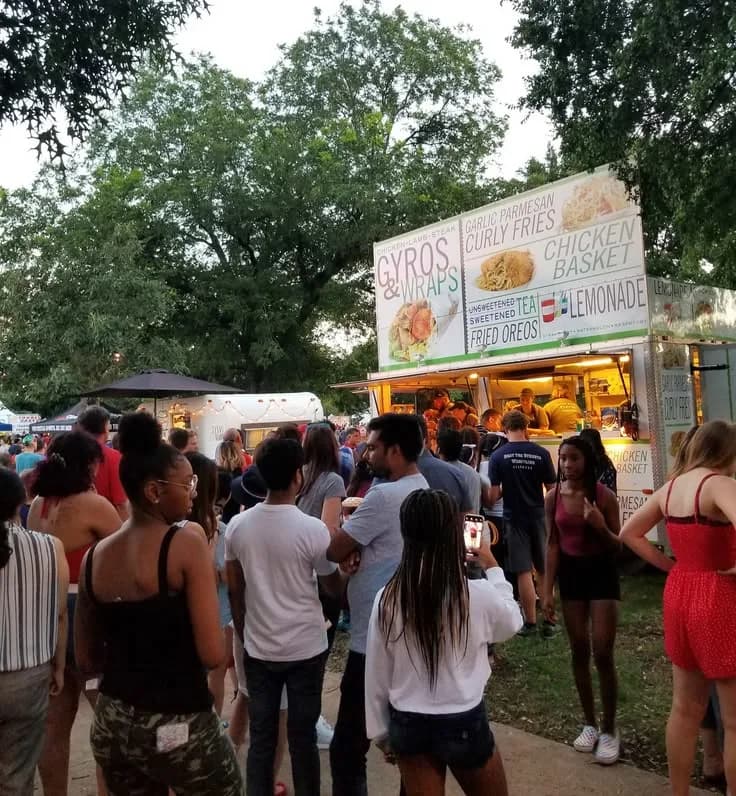
If a large crowd is expected during a short lunch or dinner period, consider using multiple vendors rather than relying on one truck.
A combination of main-meal vendors and dessert food trucks can also help spread demand throughout the event.
How to Keep Community Event Food Affordable
Budget control starts before vendors are booked.
Ask potential vendors about:
Minimum order requirements
Per-person pricing
Service fees
Travel charges
Menu limitations
Payment arrangements
Serving capacity
Setup and breakdown requirements
Comparing several affordable food trucks can help organizers understand available options before making a final decision.
It is also important to compare the complete service cost rather than looking only at the price of individual menu items.
Free or Paid: What Should You Choose?
There is no single setup that works for every community event.
Free food may be appropriate when an organizer has a dedicated food budget and wants to provide a complimentary experience. Paid food can make more sense when the event has a limited food budget or unpredictable attendance.
A hybrid model can also work when organizers want to provide some complimentary food while allowing guests to purchase additional items.
The most important factors are the event's budget, expected attendance, audience preferences, and service requirements.
Final Considerations
Choosing between free and paid food should be part of the overall event planning process. Start by estimating attendance, setting a realistic food budget, and deciding what experience you want guests to have.
Whether you choose complimentary meals, paid vendors, or a combination of both, food trucks for events can provide flexible menus and on-site service for many types of community gatherings.
With the right vendors, clear payment arrangements, and a practical serving plan, your food truck community event can provide convenient food while keeping the event organized and within budget.
FAQs
Is it better to offer free food at a community event?
Free food can be a good option when the organizer has enough budget to cover meals for the expected number of attendees. Meal vouchers or limited complimentary servings can help control costs.
Can attendees pay for their own food at a community event?
Yes. Many community events allow attendees to purchase meals directly from participating food vendors.
How many food trucks do I need for an event?
The number depends on attendance, event duration, menu complexity, and each vendor's serving capacity. Larger crowds may require multiple trucks to reduce wait times.
What types of food trucks work well for community events?
Popular options include taco trucks, burger trucks, Indian food trucks, halal food trucks, and dessert trucks. A combination of cuisines can provide more variety for guests.
Should I hire one food truck or multiple trucks?
For smaller events, one truck may be sufficient. Larger events may benefit from multiple food trucks for an event so guests have more choices and shorter lines.