
Lilly
Food Truck vs. Food Trailer: Which Is Better?
Choosing between a food truck and food trailer is one of the biggest decisions for anyone starting or expanding a mobile food business. Both options can support catering, festivals, private parties, corporate events, and regular food service, but they work differently.
A food truck combines the kitchen and vehicle into one unit, while a food trailer requires a separate tow vehicle. Understanding the differences in cost, mobility, kitchen space, customization, maintenance, and business operations can help you choose the right setup.
Whether you are considering food trucks for an event, launching a catering business, or looking for customizable food trucks, this guide compares the advantages and disadvantages of each option.
What Is a Food Truck?
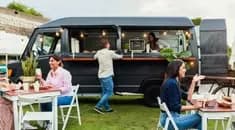
A food truck is a self-contained mobile kitchen built into a motorized vehicle. It typically includes cooking equipment, refrigeration, preparation areas, storage, plumbing, electrical systems, and a customer serving window.
Food trucks are popular for food truck catering service, festivals, corporate events, weddings, and mobile food businesses because they can drive directly to different locations.
For businesses serving DC food trucks, Northern Virginia, Maryland, or the wider DMV market, a food truck can provide strong mobility and flexibility.
Advantages of Food Trucks
Easy to drive from one location to another
No separate towing vehicle is required
Quick setup for events
Integrated kitchen and transportation
Good option for regular mobile food service
Suitable for food trucks for hire and catering operations
Can be customized around a specific menu and workflow
A food truck can be especially useful for businesses that frequently move between food truck events DC, corporate locations, festivals, and private events.
What Is a Food Trailer?
A food trailer is a mobile kitchen mounted inside a towable trailer. Unlike a food truck, the trailer does not have its own engine, so you need a suitable vehicle to tow it.
Food trailers are available in different sizes and configurations. Larger trailers can provide more room for cooking equipment, refrigeration, storage, preparation stations, and customer service areas.
For businesses that want a larger kitchen without investing in a motorized food truck chassis, a trailer can be an attractive alternative.
Advantages of Food Trailers
Often provides more kitchen space
Can accommodate larger equipment
Easier to separate the kitchen from the tow vehicle
Can be a practical choice for stationary or semi-permanent locations
Suitable for large catering operations
Can be highly customized
The tow vehicle can potentially be used separately
Food trailers can work particularly well for event food trucks, festivals, weddings, markets, and businesses that remain at a location for longer periods.
Food Truck vs. Food Trailer: Key Differences
The best choice depends on how you plan to operate your business.
Feature | Food Truck | Food Trailer |
|---|---|---|
Mobility | High | Moderate |
Separate tow vehicle | No | Yes |
Kitchen space | Moderate to large | Moderate to very large |
Setup | Faster | Requires towing and positioning |
Customization | High | Very high |
Parking flexibility | Usually better | Requires suitable towing access |
Large equipment | Depends on vehicle | Often easier to accommodate |
Long-term stationary use | Possible | Excellent |
Event catering | Excellent | Excellent |
Maintenance | Vehicle + kitchen | Trailer + tow vehicle |
Driving | Self-powered | Requires tow vehicle |
Which Is More Mobile?
If mobility is your highest priority, a food truck generally has the advantage.
You can start the engine and travel directly from one location to another without connecting a trailer. This makes food trucks convenient for businesses serving multiple locations during the week.
For example, a mobile operator might serve lunch at an office park, attend a private event in the evening, and participate in a weekend festival.
A food trailer can also be moved, but you need a compatible tow vehicle and additional time to connect, transport, position, and disconnect the trailer.
Which Has More Kitchen Space?
Food trailers often have an advantage when kitchen space is a major priority.
Because trailers can be designed with wider and longer layouts, they may provide more room for cooking equipment, refrigeration, prep counters, storage, and specialized equipment.
This can be important for menus that require several cooking stations.
For example, businesses serving taco food trucks, bbq food trucks, dessert food trucks, or larger catering menus may benefit from a layout designed around multiple preparation and cooking stations.
Which Is Better for Customization?
Both options can be highly customized.
A professional builder can design the interior around your menu, workflow, equipment requirements, serving window, storage needs, plumbing, electrical system, and applicable health requirements.
Businesses looking for customizable food trucks can choose equipment and layouts based on their specific concept.
Food trailers can also offer extensive customization, especially when a larger kitchen footprint is required.
The most important factor is not simply how much equipment you can install. Your layout should allow staff to move efficiently between preparation, cooking, storage, washing, and service areas.
Which Is Better for Catering and Events?
Both food trucks and trailers can be excellent for catering.
If your business focuses on food truck catering near me, corporate lunches, weddings, festivals, private parties, or community events, either option can work.
Food trucks are convenient when you need to move frequently between venues. Food trailers can be ideal when the unit will remain at an event for several hours or when additional kitchen space is important.
Businesses offering food truck catering for weddings, food truck rental for a party, or corporate catering should consider:
Number of guests
Menu complexity
Event duration
Venue access
Available parking
Power requirements
Water and waste requirements
Required cooking equipment
Number of staff
Food Truck vs. Food Trailer for Weddings
Weddings often require flexible service and an attractive presentation.
Wedding food trucks can provide a memorable experience while serving guests efficiently. They can work for appetizers, main meals, desserts, beverages, or late-night food.
A trailer can also be an excellent choice for food truck rental wedding services when the unit will stay at the venue throughout the event.
Before booking or building a unit for weddings, consider the venue's access, parking, electrical availability, service area, and local requirements.
Food Truck vs. Food Trailer for Corporate Events
Corporate events can include office lunches, employee appreciation events, company celebrations, conferences, and promotional activations.
A food truck can be especially useful when the business needs a mobile operation that can visit different offices or event venues.
For companies arranging catering for corporate event needs, the most important considerations are usually service speed, menu capacity, guest count, and scheduling.
A properly designed food truck or trailer can support efficient service while creating an engaging experience for employees and guests.
What About Food Truck Cuisine?
Your menu should influence your vehicle choice.
A smaller menu may work efficiently in a compact food truck. A larger menu with several cooking methods may require the additional space available in a food trailer.
Popular mobile food concepts include:
Indian food truck
food truck halal
food truck burgers
food truck tacos
taco food trucks
bbq food trucks
dessert food trucks
Mexican food trucks
Sandwich concepts
Breakfast concepts
Specialty catering
If your concept requires several cooking stations, larger refrigeration capacity, or extensive preparation space, a trailer may provide more flexibility.
Cost Considerations
The total cost of a food truck or trailer depends on size, equipment, materials, customization, chassis or trailer specifications, electrical systems, plumbing, ventilation, fire-safety equipment, and other requirements.
You should evaluate the total cost of ownership, not just the initial purchase price.
Consider:
Vehicle or trailer cost
Kitchen equipment
Refrigeration
Ventilation
Electrical systems
Plumbing
Fire suppression
Maintenance
Insurance
Fuel
Towing vehicle
Permits and licenses
Repairs
Event transportation
If you are researching food truck manufacturing companies, compare their experience, build quality, customization capabilities, equipment installation, and compliance support rather than choosing only by price.
Mobility vs. Kitchen Space
The simplest way to think about the decision is:
Choose a food truck if mobility is your priority.
Choose a food trailer if kitchen space and flexibility are your priority.
A food truck can be easier for operators who move frequently. A food trailer can make more sense for businesses that attend larger events or operate from relatively fixed locations.
What About Permits and Licenses?
Regardless of whether you choose a truck or trailer, you need to understand the regulations that apply to your operating locations.
Requirements can vary by state, county, and city. Depending on your business model, you may need health department approvals, business licenses, food-service permits, inspections, parking permissions, and other documentation.
Before starting operations, research applicable food truck permits and licenses for every jurisdiction where you plan to operate.
For businesses operating around Washington, DC, Northern Virginia, and Maryland, requirements may differ between jurisdictions.
Which One Should You Choose?
There is no universal winner.
Choose a Food Truck If:
You move between locations frequently.
You want an all-in-one vehicle.
You prioritize mobility.
You operate regular mobile routes.
You want quick movement between events.
You plan to serve multiple locations across the DMV area.
Choose a Food Trailer If:
You need more kitchen space.
Your menu requires larger equipment.
You already have a suitable tow vehicle.
You attend larger events.
You expect to stay at locations for longer periods.
You want a flexible kitchen configuration.
Final Verdict
So, food truck vs. food trailer: which is better?
The answer depends on your business model.
A food truck is generally better for mobility, quick relocation, and businesses that frequently move between locations. A food trailer can be better for larger kitchens, extensive customization, and businesses that operate at events or relatively fixed locations.
Before making your decision, define your menu, target customers, event schedule, service area, equipment requirements, budget, and expected workload.
If you plan to operate in the DMV, consider how often you will serve DC food trucks markets, Northern Virginia communities, Maryland events, corporate locations, weddings, and private parties. The right design should support your workflow today while leaving room for your business to grow.
Whether you choose a truck or trailer, working with an experienced builder can help you create a practical mobile kitchen designed around your menu, equipment, workflow, and applicable requirements.