
Lilly
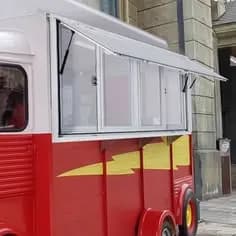
Food Truck Serving Window Design: Sizes, Layouts and Tips
A food truck serving window is more than an opening where customers receive their meals. It plays an important role in the truck's workflow, customer experience, ventilation, service speed, and overall design.
Whether you are building a taco truck, Indian food truck, burger concept, catering truck, or another mobile kitchen, choosing the right serving window size and location can make daily operations much easier.
For businesses serving DC food trucks customers, participating in events, or providing catering throughout the DMV area, the serving window should be designed around both the kitchen workflow and the way customers will approach the truck.
What Is a Food Truck Serving Window?
A food truck serving window is the opening used to communicate with customers, take orders, hand over food, and sometimes process payments.
A well-designed window should provide enough space for employees to work comfortably while giving customers a clear and convenient service point.
The design can vary depending on:
Truck size
Kitchen layout
Menu
Number of employees
Service volume
Equipment placement
Customer flow
Operating environment
A window that works well for a small dessert truck may not be appropriate for a busy taco or burger operation.
Why Serving Window Design Matters
Food trucks often operate in busy environments where speed and organization matter.
A poorly positioned serving window can create unnecessary movement between cooking, preparation, payment, and pickup areas. A well-planned window can make the entire operation more efficient.
Good serving-window design can help with:
Faster customer service
Better employee workflow
Easier order handoff
Improved ventilation
More organized customer queues
Better use of limited interior space
Improved exterior appearance
This becomes particularly important for mobile food trucks that need to maximize every available square foot.
Standard Food Truck Serving Window Sizes
There is no single standard size that works for every food truck.
Common serving-window dimensions depend on the truck body, menu, equipment, and intended service style. A smaller window may work for limited menus, while a larger opening can be useful for high-volume operations.
When choosing a size, consider:
How many employees will use the window?
Will customers order and receive food at the same location?
Will a POS system be installed nearby?
How large are the food containers and serving trays?
Does the window need additional counter space?
Will the window include a fold-up awning?
The goal is not simply to make the largest possible opening. It is to create a serving station that supports the entire workflow.
Small Serving Windows
A compact serving window can be suitable for a truck with a simple menu and limited staff.
For example, a dessert truck or small catering operation may not need a large service opening.
A smaller window can also preserve valuable wall space for:
Refrigeration
Shelving
Preparation counters
Equipment
Storage
If your concept focuses on a limited menu, a compact design may provide enough service space without taking away too much interior workspace.
Large Serving Windows
Larger windows can be beneficial for high-volume operations.
A taco truck, BBQ truck, burger truck, or busy catering operation may need more room for employees to communicate with customers and pass larger orders.
A larger opening can also improve visibility and create a more open customer-facing experience.
However, increasing the size of the window should not compromise structural integrity, insulation, equipment placement, or weather protection.
Choosing the Best Serving Window Location
The location of the window should be determined during the initial truck layout.
Think about the complete customer journey:
Queue → Order → Payment → Food Preparation → Pickup
Ideally, the window should be positioned where employees can move food from the kitchen to the customer without crossing unnecessary paths.
For food trucks for an event, this can help maintain faster service when many customers are waiting.
Serving Window and Kitchen Workflow
Your serving window should work together with the rest of the kitchen.
For example, if the primary cooking equipment is located on the opposite side of the truck, employees may need to repeatedly walk across the kitchen to serve orders.
A better layout keeps frequently used equipment close to the service area.
Depending on your menu, you may want:
Prep counter near the window
Holding area near pickup
POS system near the ordering point
Condiment station within easy reach
Beverage storage close to the customer area
Packaging supplies near the handoff counter
This approach can make food truck catering service operations more efficient.
Serving Windows for Taco Trucks
Taco concepts often require quick assembly and high order volume.
A practical taco-truck layout may place the preparation and finishing stations relatively close to the serving window.
If your menu includes tacos, burritos, bowls, or similar items, consider where ingredients, packaging, sauces, and finished orders will be placed.
A well-designed setup can support faster service during busy food truck events and private functions.
Serving Windows for Indian Food Trucks
An Indian food truck may need additional space for hot holding, preparation, rice, sauces, breads, and packaged meals.
The serving window should provide enough counter space for employees to organize orders before handing them to customers.
The layout should also account for safe separation between hot equipment and the customer-facing service area.
Serving Windows for Burger and BBQ Trucks
Burger and BBQ concepts can require substantial cooking and holding equipment.
A serving window should ideally be positioned to support an efficient transition from cooking to holding, assembly, and customer pickup.
If the menu includes multiple sides, sauces, drinks, and packaged meals, additional counter space around the service opening can be especially useful.
Serving Windows for Catering and Events
Food trucks are increasingly used for private parties, weddings, corporate gatherings, and community events.
If you provide a food truck for catering, the serving window becomes the primary customer interaction point.
For larger events, consider:
Multiple service stations
Clear customer queue direction
Menu visibility
POS placement
Pickup space
Weather protection
Lighting for evening events
A well-designed service area can help your team handle food trucks for events near me searches in the real world by creating a smoother experience once customers arrive.
Weather Protection and Serving Window Awnings
The serving area should also be designed with weather conditions in mind.
Rain, direct sunlight, wind, and cold temperatures can affect both employees and customers.
A fold-up awning can provide protection over the service counter while creating a more comfortable customer-facing area.
For trucks that regularly participate in outdoor events, weather protection can be particularly valuable.
Serving Window Counter Design
The counter surrounding the window should be durable and easy to clean.
Consider the materials used for:
Countertops
Window frames
Hinges
Latches
Shelving
Exterior surfaces
The counter should provide enough space for order handoff without becoming an obstacle for customers.
If the truck is designed for food trucks to hire for events, the counter should also support the expected service volume.
POS and Payment Placement
Payment equipment should be positioned where employees can access it without blocking food preparation.
A POS terminal, tablet, card reader, or cash drawer may need dedicated space near the serving window.
If customers order and collect food at the same window, consider creating separate areas for:
Ordering → Payment → Pickup
This can reduce confusion during busy periods.
Serving Window Security
A serving window should be easy to close and secure when the truck is not operating.
Important considerations can include:
Strong locking hardware
Secure window panels
Weather-resistant construction
Durable hinges
Proper closure mechanisms
Security becomes especially important when trucks are transported between different operating locations.
Serving Window Design for Custom Food Trucks
If you are working with a food truck manufacturing company, discuss the serving window during the design stage rather than treating it as an afterthought.
A custom truck gives you the opportunity to coordinate the window with:
Kitchen equipment
Plumbing
Electrical systems
Refrigeration
Ventilation
Storage
Branding
Customer flow
This can be particularly useful for customizable food trucks because the layout can be built around the actual business model.
Serving Window Design and Branding
The serving window is also one of the most visible parts of the truck.
Your exterior design can incorporate:
Logo placement
Menu boards
Brand graphics
Lighting
Signage
Service-area colors and materials
If customers can easily identify the menu and ordering point, the truck can create a clearer experience at busy events.
Serving Window Mistakes to Avoid
Avoid designing the window based only on appearance.
Common mistakes include:
Making the opening too small
Placing the window too close to equipment
Creating insufficient counter space
Ignoring customer queue flow
Forgetting weather protection
Blocking ventilation or equipment access
Installing payment equipment without planning
Failing to consider employee movement
The best design balances appearance, functionality, safety, and service speed.
Food Truck Serving Window Design Checklist
Before finalizing your design, review these points:
Window dimensions
Employee working space
Customer standing space
Counter depth
POS placement
Food pickup area
Menu visibility
Awning requirements
Security
Weather protection
Kitchen workflow
Equipment location
Electrical requirements
Exterior branding
Cleaning and maintenance
Taking these details into account early can prevent expensive redesigns later.
Final Thoughts
The best food truck serving window is one that supports the way your business actually operates. Size, location, counter space, equipment placement, customer flow, and weather protection should all be considered together.
Whether you're designing a taco truck, Indian food truck, burger truck, BBQ concept, dessert truck, or catering operation, a well-planned service window can improve both employee workflow and customer experience.
For operators looking into food truck manufacturing companies, custom fabrication provides an opportunity to build the serving window around the menu, equipment, staffing, and expected service volume from the beginning.
FAQs
1. What is the best size for a food truck serving window?
There is no universal best size. The ideal dimensions depend on the truck layout, menu, number of employees, equipment, and expected customer volume.
2. Where should a food truck serving window be located?
The window should generally be positioned where employees can efficiently move food from preparation and cooking areas to customers without unnecessary movement.
3. Does a food truck serving window need an awning?
An awning is not always required, but it can provide useful protection from rain and direct sunlight and make the customer service area more comfortable.
4. Can a serving window be customized?
Yes. Custom food trucks can be designed with different window sizes, counters, awnings, locking systems, layouts, and exterior finishes depending on the business requirements.
5. Should the serving window be designed before the kitchen?
The serving window and kitchen should be planned together. Its location can affect equipment placement, employee workflow, storage, plumbing, electrical systems, and customer flow.