
Lilly
Food Truck Serving Window Design: Sizes, Layouts and Tips
A food truck serving window is one of the most important parts of your mobile kitchen. It is where customers place orders, receive food, and interact with your staff. A well-designed serving window can improve customer flow, speed up service, and make your truck more attractive.
Whether you are building a new food truck, remodeling an existing unit, or planning customizable food trucks, the right serving window design should match your menu, equipment, staff workflow, and expected customer volume.
What Is a Food Truck Serving Window?
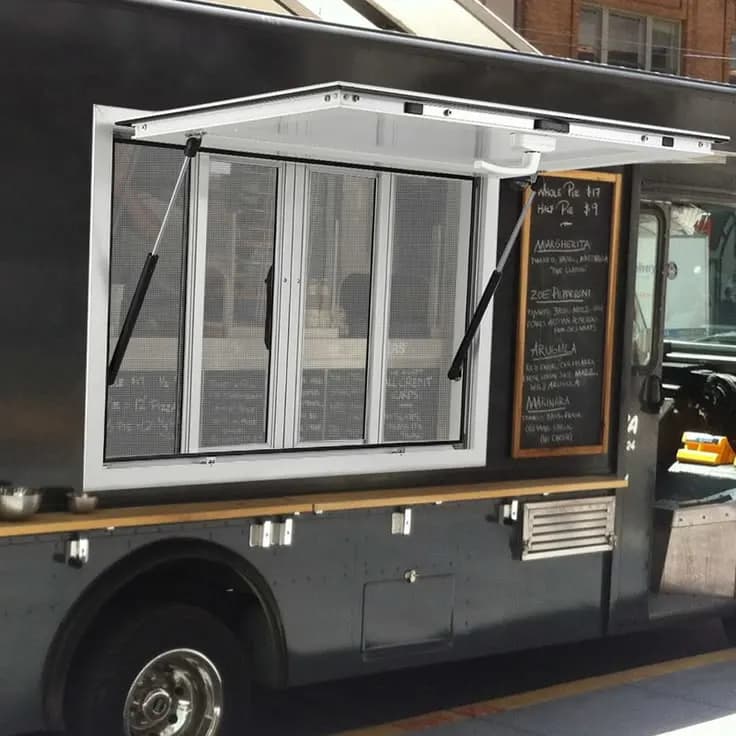
A food truck serving window is an opening on the side of a mobile kitchen where customers can order and receive their food. Depending on your concept, it may include a countertop, sliding or folding window, awning, shelves, menu board, lighting, and service equipment.
For businesses offering food truck catering service, the serving window also needs to handle larger crowds efficiently. A poorly positioned window can create congestion, slow down employees, and make event service difficult.
Common Food Truck Serving Window Sizes
There is no single standard size for every food truck. The ideal dimensions depend on the truck's layout, menu, equipment, and number of employees.
Small Serving Windows
A smaller window can work well for simple concepts with limited menus, such as coffee, desserts, or specialty snacks.
A compact design may include:
Small service counter
Order and pickup area
Menu display
Basic awning
Limited shelving
This type of window can help preserve valuable interior wall space for cooking equipment and storage.
Medium Serving Windows
Medium-sized windows are suitable for many mobile food trucks serving burgers, tacos, sandwiches, or other made-to-order meals.
They provide enough space for:
Taking customer orders
Passing completed meals
Payment equipment
Condiment storage
Menu displays
For food truck burgers, taco food trucks, or other high-volume concepts, a properly planned medium-sized window can provide a good balance between customer access and interior workspace.
Large Serving Windows
Large serving windows are useful for food trucks that expect high customer volume, particularly at festivals, corporate events, and other food trucks for an event situations.
A larger opening can make it easier for multiple employees to work around the service area. However, increasing the window size also means giving up more wall space, so the overall truck layout should be planned carefully.
Food Truck Serving Window Layout
The serving window should be positioned according to how customers and employees move through the truck.
A typical workflow may look like:
Order → Payment → Food Preparation → Pickup
Keeping these stages organized can reduce unnecessary movement inside the truck.
For example, if customers order on one side while employees prepare food directly behind the window, completed orders can be handed out without staff crossing the entire kitchen.
This becomes especially important for food truck catering events, where dozens or hundreds of customers may need to be served within a limited time.
What Should Be Included Around the Serving Window?
A serving window is more than just an opening. Several components can make the area more practical.
1. Service Counter
The countertop should provide enough space for customers to comfortably receive their food. It should also be durable and easy to clean.
2. Awning
An awning can provide protection from sunlight and light rain while making the service area more comfortable.
3. Menu Board
Your menu should be easy to see before customers reach the ordering point. Digital displays, printed boards, or exterior signage can all work depending on your truck.
If your business specializes in food truck tacos, for example, displaying popular taco options and combo meals near the window can make ordering easier.
4. Payment Area
Leave enough countertop space for payment equipment and order-taking. The exact setup will depend on how your business handles transactions.
5. Pickup Space
If you receive a lot of customers, separate ordering and pickup areas can improve traffic flow. This is particularly useful for food trucks for hire at busy events.
Serving Window Design for Different Food Truck Concepts
Different menus require different serving-window layouts.
Burger Food Trucks
A burger concept may need a larger pickup area because orders can include burgers, fries, drinks, and other sides.
The service window should be close to the cooking and holding equipment while keeping customers away from the cooking area.
Taco Food Trucks
Taco food trucks can benefit from a service window designed around fast assembly. Ingredients, tortillas, toppings, and finished orders should follow a logical workflow.
A good layout can help staff prepare multiple orders without constantly moving back and forth.
Indian Food Trucks
An indian food truck may require additional space for hot holding, rice, curries, breads, and packaging.
The serving window should be positioned so employees can move prepared food from the cooking and holding areas to customers efficiently.
Dessert Food Trucks
Dessert food trucks may need less cooking space but more display and finishing space. A visually appealing serving window can also help showcase products and attract customers.
Food Truck Serving Window Materials
The serving window and surrounding counter should be built with commercial use in mind.
Important considerations include:
Durability
Easy cleaning
Weather resistance
Food-safe surfaces
Proper sealing
Structural strength
Compatibility with the truck body
Because food trucks operate outdoors and travel between locations, the serving area needs to withstand frequent use and transportation.
Serving Windows for Catering and Events
If you plan to hire a food truck for an event, serving speed is one of the most important considerations.
Food trucks used for weddings, corporate events, festivals, and private parties can experience sudden customer surges. A good window design helps employees maintain a consistent workflow even when the line becomes busy.
For food truck catering, consider:
Expected guest count
Number of employees
Menu complexity
Order volume
Separate pickup areas
Payment process
Customer queue location
For food truck catering for weddings, the serving area should also complement the event setup and allow guests to approach and leave the truck without creating congestion.
How to Design a Serving Window for Better Customer Flow
Customer movement should be considered before the truck is fabricated.
Keep the Window Easy to Access
Customers should be able to see where to order without confusion.
Avoid Creating Bottlenecks
Do not position the window where customers will block other important areas of the truck.
Plan for Peak Demand
Think about how many customers may arrive within a short period. A serving window that works for ten customers may become inefficient when serving fifty customers.
Consider Your Staff
The window should allow employees to communicate and pass food without interfering with cooking operations.
Serving Window Safety and Compliance
Food truck construction should follow applicable health, fire, electrical, plumbing, and safety requirements.
The serving window itself should be integrated into the overall food truck design rather than treated as an afterthought.
Depending on your location and equipment, you may also need to consider requirements related to ventilation, fire protection, food preparation surfaces, handwashing, plumbing, and equipment placement.
Before fabrication, check the requirements that apply to your operating location and intended menu.
Common Food Truck Serving Window Design Mistakes
Avoid these common problems:
Making the window too small: A small opening can slow service when customer volume increases.
Ignoring workflow: A beautiful window will not help if employees have to walk across the kitchen for every order.
Not planning customer traffic: Customers need enough space to order, wait, and collect food.
Forgetting weather protection: Outdoor service can become uncomfortable without a properly designed awning.
Using unsuitable materials: Commercial food service areas need surfaces that are durable and easy to maintain.
Designing before choosing equipment: Equipment placement can significantly affect the best location and size of the serving window.
How a Professional Food Truck Builder Can Help
Serving-window design should be part of the complete truck layout. A professional builder can coordinate the window with cooking equipment, refrigeration, storage, plumbing, electrical systems, ventilation, and customer flow.
This is especially important when building customizable food trucks for specialized concepts.
Whether you are creating a taco truck, burger truck, Indian food truck, dessert truck, or catering vehicle, the serving window should support the way your business actually operates.
Final Thoughts
A well-designed food truck serving window can improve customer experience, employee workflow, and service speed. The right size and layout depend on your menu, equipment, staffing, customer volume, and event requirements.
Before fabrication, plan the serving window together with the entire mobile kitchen layout. This helps ensure that your truck is practical, efficient, and ready for everyday service as well as high-volume food truck events.
If you are planning a new food truck or modifying an existing one, working with an experienced builder can help you create a serving window that fits your business from the beginning.