
Lilly
Food Truck Flooring Options: Best Materials for Mobile Kitchens
Choosing the right food truck flooring is an important part of building a safe, durable, and easy-to-maintain mobile kitchen. Unlike flooring in a traditional restaurant, food truck floors need to handle constant movement, heavy cooking equipment, moisture, grease, temperature changes, and daily cleaning.
A properly selected floor can help create a more efficient workspace while supporting sanitation and long-term durability. Whether you are building a new truck, upgrading an existing unit, or considering customizable food trucks, understanding your flooring options can help you make a better investment.
Why Food Truck Flooring Matters
A food truck floor does much more than provide a surface to walk on. It supports equipment, employees, storage areas, and food preparation activities throughout the day.
The right flooring should be:
Durable enough for heavy equipment
Resistant to water and moisture
Easy to clean and sanitize
Resistant to grease and common kitchen chemicals
Slip-resistant for employee safety
Strong enough to withstand daily use
Suitable for health department requirements
Because mobile kitchens have limited space, flooring also needs to work well around cooking equipment, refrigerators, sinks, prep tables, and other kitchen components.
Best Food Truck Flooring Materials
There are several flooring materials that can work well in mobile kitchens. The best choice depends on your truck's layout, equipment, budget, and operational requirements.
1. Commercial Vinyl Flooring
Commercial-grade vinyl is one of the commonly considered options for food truck interiors.
It provides a relatively smooth surface that can be cleaned easily and is available in different thicknesses and finishes. High-quality commercial vinyl can also provide resistance to moisture and everyday kitchen wear.
However, the material and installation method matter. A food truck experiences vibration and movement, so flooring should be properly installed over a suitable subfloor.
Best for: Food trucks looking for a practical and easy-to-maintain flooring solution.
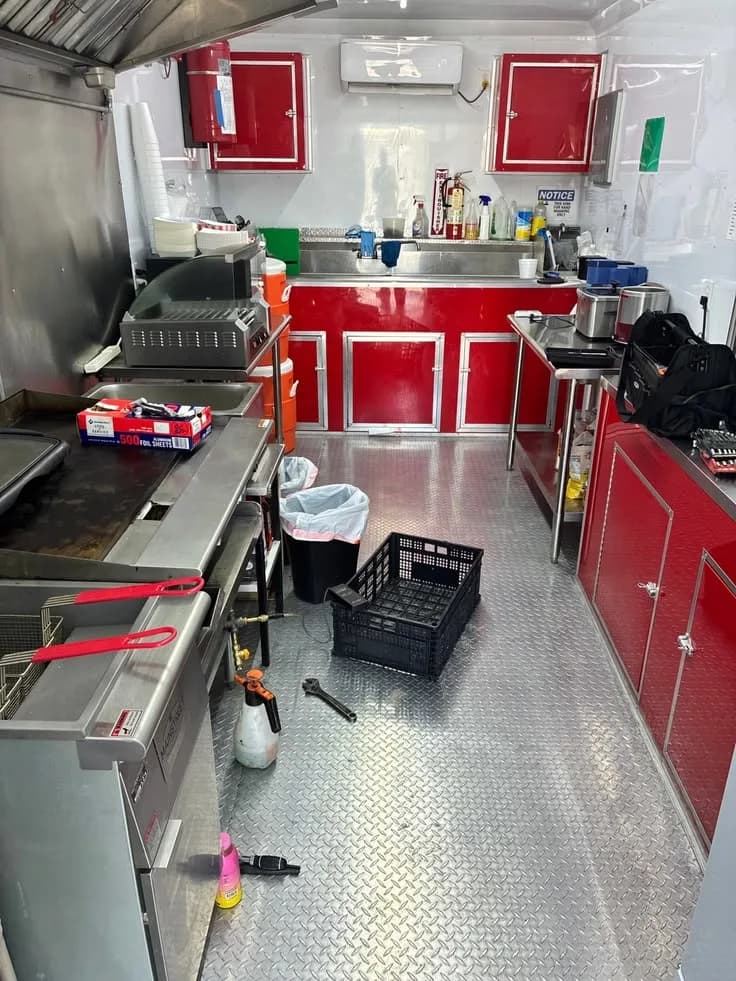
2. Aluminum Flooring
Aluminum can be a strong option for certain mobile kitchen applications. It is lightweight, durable, and resistant to moisture.
Aluminum flooring can work particularly well in areas where durability is a major concern. It can also complement other metal components commonly used in food truck construction.
The surface finish should be selected carefully because some metal surfaces can become slippery when wet or greasy.
Best for: Heavy-duty mobile kitchens where durability and moisture resistance are priorities.
3. FRP Flooring
Fiberglass-reinforced plastic, commonly known as FRP, is another material used in commercial food environments.
FRP surfaces are valued for their resistance to moisture and their relatively easy cleaning requirements. They can be useful in areas where water exposure is common.
The installation must still be handled correctly to prevent gaps or areas where moisture and debris could accumulate.
Best for: Food trucks that require moisture-resistant surfaces and frequent cleaning.
4. Seamless Resin or Epoxy Flooring
Seamless flooring systems can provide a smooth, continuous surface with fewer joints where dirt and moisture can collect.
Epoxy-style flooring is often considered for commercial kitchen environments because of its durability and resistance to regular cleaning.
For a mobile kitchen, however, the system needs to be appropriate for the underlying structure and the movement of the vehicle. Professional installation is especially important.
Best for: High-use mobile kitchens that need a durable, easy-to-clean surface.
What Makes a Good Food Truck Floor?
When comparing food truck flooring options, don't choose a material based only on appearance or price. Consider how the truck will actually operate.
Water and Moisture Resistance
Mobile kitchens regularly use sinks, water lines, cleaning equipment, and other fixtures that can expose the floor to moisture.
A flooring system should help prevent water from penetrating areas where it could damage the underlying structure.
Slip Resistance
Kitchen floors can become wet or greasy during normal operations. A suitable flooring surface should provide appropriate traction while remaining practical to clean.
Easy Cleaning
Food trucks need frequent cleaning. Smooth, properly installed surfaces can make daily cleaning easier and help employees maintain a sanitary workspace.
Durability
Commercial kitchen equipment can be heavy. Refrigeration units, cooking equipment, prep tables, and storage systems can place significant loads on the floor.
The flooring system should be selected with the complete kitchen layout in mind.
Food Truck Flooring and Health Department Requirements
Food safety requirements can vary depending on the location where a food truck operates. Before selecting a flooring material, operators should check the requirements of the relevant health department.
A flooring system should generally be durable, cleanable, and maintained in good condition. Cracks, damaged surfaces, open seams, or areas that allow moisture and debris to collect can create maintenance and sanitation concerns.
If you are working with food truck manufacturing companies, ask them how the proposed flooring system fits into the overall construction and sanitation requirements of your target operating area.
Flooring for Different Types of Mobile Kitchens
Not every mobile kitchen has the same requirements.
A coffee truck may have different flooring needs from a high-volume cooking truck. A unit serving burgers, barbecue, desserts, or other menu items may experience different levels of grease, heat, water, and equipment traffic.
For example, a high-volume cooking operation may benefit from a particularly durable and easy-to-clean flooring system. A lighter-duty mobile kitchen may have more flexibility when choosing between commercial flooring materials.
This is why flooring should be considered during the design stage rather than treated as an afterthought.
How Flooring Fits Into a Custom Food Truck Build
Flooring is only one part of a complete mobile kitchen. It needs to work with the truck's walls, ceiling, plumbing, electrical systems, ventilation, cooking equipment, storage, and overall layout.
For customizable food trucks, flooring can be selected as part of the complete interior design.
The construction team can consider factors such as:
Kitchen equipment placement
Employee walking paths
Sink and plumbing locations
Cooking areas
Storage requirements
Drainage and moisture exposure
Cleaning access
Overall vehicle weight
Planning these elements together can help create a more functional mobile kitchen.
Common Food Truck Flooring Mistakes
One of the biggest mistakes is selecting flooring based only on the lowest upfront cost.
A cheaper material may require more maintenance or may not perform well under heavy commercial use.
Other common mistakes include:
Choosing a material that is difficult to clean.
Ignoring slip resistance.
Failing to properly seal seams and edges.
Installing flooring without considering the subfloor.
Forgetting about equipment weight.
Selecting a flooring system without checking applicable health requirements.
Treating flooring as a final cosmetic decision instead of part of the kitchen design.
Avoiding these mistakes can help reduce future repair and maintenance problems.
Professional Flooring Installation for Mobile Food Trucks
Proper installation is just as important as the flooring material itself. Even a high-quality product can perform poorly if it is installed incorrectly.
Professional installation should account for the vehicle's structure, movement, equipment placement, seams, edges, and areas exposed to water or grease.
If your project involves a new build, renovation, or mobile food truck solutions, discuss flooring requirements with your builder before construction begins.
Choosing the Right Food Truck Flooring
The best food truck flooring depends on how your mobile kitchen will operate.
When comparing options, consider:
Durability
Cleaning requirements
Moisture resistance
Slip resistance
Equipment weight
Installation requirements
Maintenance
Applicable health department standards
Overall project budget
A well-designed floor should support the entire kitchen rather than simply look good.
For businesses planning new mobile food trucks, choosing the flooring during the design and fabrication process can make it easier to integrate the floor with equipment, plumbing, storage, and other systems.
Final Thoughts
The right food truck flooring can make a significant difference in the safety, sanitation, durability, and usability of a mobile kitchen. Commercial vinyl, aluminum, FRP, and seamless flooring systems can each have advantages depending on the application.
Before making a decision, consider your menu, equipment, operating environment, cleaning routine, and local requirements. Most importantly, make sure the flooring is properly installed as part of the complete mobile kitchen design.
A professional food truck builder can help you evaluate flooring options and integrate the selected system into the overall build, renovation, or mobile food truck solutions for your business.