
Lilly
Food Truck Electrical Load Calculation: How Much Power Do You Need?
A food truck depends on a reliable electrical system to keep kitchen equipment, refrigeration, lighting, ventilation, payment systems, and other appliances running safely. Before choosing a generator or electrical setup, it is important to understand your food truck electrical load.
The amount of power you need depends on the equipment installed in your truck. A small operation with limited appliances may have a much lower electrical demand than a full commercial kitchen serving burgers, tacos, Indian food, BBQ, or catering orders.
Understanding your electrical load before construction can help you choose the right equipment, avoid overloads, and create a more efficient mobile kitchen.
What Is Food Truck Electrical Load?
Electrical load refers to the amount of electrical power your food truck equipment requires while operating.
Every appliance has a power rating, commonly listed in watts (W) or kilowatts (kW). When several appliances operate at the same time, their power requirements add together.
For example, a food truck might use electricity for:
Refrigerators
Freezers
Cooking equipment
Exhaust fans
Air conditioning
Water pumps
Water heaters
Interior lighting
Exterior lighting
POS systems
Small countertop appliances
The combined demand determines the approximate electrical load your truck needs to support.
How to Calculate Your Food Truck Electrical Load
A basic load calculation starts by listing every electrical appliance and its wattage.
Use this simple formula:
Total Load = Watts of Appliance 1 + Appliance 2 + Appliance 3 + All Other Appliances
For example, if your equipment requires:
Refrigerator: 1,000 W
Freezer: 800 W
Water heater: 1,500 W
Exhaust fan: 500 W
Lighting: 300 W
POS and small equipment: 400 W
The connected load would be:
1,000 + 800 + 1,500 + 500 + 300 + 400 = 4,500 watts
This is a basic example. Actual electrical planning should account for equipment specifications, startup requirements, duty cycles, circuits, and applicable electrical codes.
Connected Load vs. Actual Operating Load
The total wattage of every appliance does not always represent the exact amount of electricity your truck will continuously consume.
Some equipment cycles on and off. Refrigerators and freezers, for example, may not run continuously.
Other equipment can have higher startup requirements.
For this reason, electrical planning should consider both:
Connected load
Expected operating load
Startup or surge requirements
A qualified electrician or electrical professional can help determine the appropriate system for your specific truck.
Why Food Truck Equipment Matters
Your menu has a major effect on electrical requirements.
A simple dessert operation may need refrigeration, small appliances, lighting, and a POS system. A high-volume commercial kitchen can require considerably more power.
For example, food truck burgers may involve grills, refrigeration, exhaust equipment, and food-holding equipment.
A taco operation may use different cooking and refrigeration equipment, while an Indian food truck may require a different combination of appliances.
The electrical system should therefore be designed around the actual equipment list rather than an estimated number.
Common Food Truck Equipment That Uses Electricity
Before calculating your load, create a complete equipment schedule.
Refrigeration
Refrigerators and freezers are essential for many mobile food trucks.
Record the wattage or amperage of each refrigeration unit and check the manufacturer's specifications for startup requirements.
Cooking Equipment
Electric cooking equipment can significantly increase your electrical demand.
Examples include:
Electric griddles
Induction cooktops
Fryers
Ovens
Food warmers
Rice cookers
Microwaves
If your concept uses several electric cooking appliances simultaneously, your total load can increase quickly.
Exhaust and Ventilation
Commercial cooking equipment may require exhaust fans and ventilation systems.
These systems consume electricity and should be included in the load calculation.
A properly planned ventilation system is especially important for busy food truck catering service operations where equipment may operate continuously during service.
Water Heaters and Pumps
Water heaters can be one of the larger electrical loads on a food truck.
Water pumps generally consume less power, but they still need to be included in the calculation.
Your plumbing and electrical systems should be coordinated during the truck design.
Lighting
Interior and exterior lighting usually represents a smaller portion of the total electrical load.
However, lighting should still be included when calculating your complete system.
LED fixtures can be useful for reducing electrical consumption while providing adequate illumination.
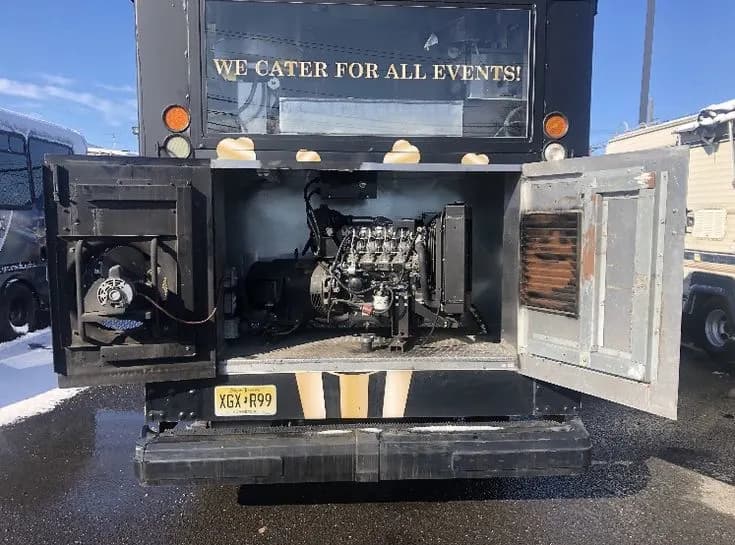
Generator Size and Electrical Load
Once you understand your electrical requirements, you can evaluate your generator or other power source.
A generator should not simply be selected based on the truck's largest appliance. The complete electrical system needs to be considered.
You should account for:
Total running wattage
Startup requirements
Simultaneous equipment use
Safety margin
Future equipment additions
For example, a truck with a calculated operating requirement of several thousand watts may need a generator with additional capacity rather than one that operates continuously at its maximum rating.
Generator sizing should be verified by a qualified professional using the actual equipment specifications.
Shore Power for Food Trucks
Some food trucks can connect to an external electrical supply, commonly called shore power, when operating at locations that provide an appropriate connection.
This can be useful at certain events, commercial properties, or permanent operating locations.
However, the available shore-power connection must be compatible with the truck's electrical requirements.
Before relying on shore power, confirm:
Voltage
Amperage
Connection type
Circuit capacity
Event or property requirements
A truck should never be connected to an unsuitable power source.
Generator vs. Shore Power
Many food truck operators consider both generator power and shore power.
A generator provides greater independence when operating at locations without an external electrical connection. Shore power can be useful where suitable electrical infrastructure is available.
The best setup depends on:
Equipment load
Operating locations
Event requirements
Truck design
Budget
Noise considerations
Backup-power needs
Some businesses may benefit from having a system that supports both options.
Electrical Load for Different Food Truck Concepts
There is no universal power requirement for every food truck.
Taco Food Trucks
Taco food trucks may use griddles, refrigeration, warmers, exhaust equipment, lighting, and POS systems.
If the cooking equipment is electric, the overall load can become substantial.
Indian Food Trucks
An Indian food truck may use refrigeration, warming equipment, rice cookers, exhaust systems, and other kitchen appliances.
The exact load depends on the menu and cooking method.
BBQ Food Trucks
BBQ operations can have a different electrical profile depending on whether the primary cooking equipment is gas, wood, or electric.
Even when cooking equipment does not use significant electricity, refrigeration, ventilation, lighting, and other appliances still contribute to the electrical load.
Dessert Food Trucks
A dessert operation may require refrigeration, freezers, mixers, ovens, display equipment, and other appliances.
The equipment list should be finalized before determining the electrical system.
Food Truck Electrical Panels and Circuits
A commercial food truck needs an electrical distribution system capable of safely supplying its equipment.
Individual appliances may require dedicated circuits depending on their electrical specifications and applicable codes.
During the design stage, consider:
Main electrical panel
Circuit breakers
Dedicated circuits
Grounding
Wiring
Receptacle locations
Equipment disconnects
Generator connection
Shore-power connection
Electrical work should be completed by qualified professionals and according to applicable local requirements.
Why Electrical Planning Should Start Before Fabrication
Electrical load calculations should be completed before the truck is fully fabricated.
This allows the builder and electrician to coordinate:
Equipment placement
Wiring routes
Electrical panels
Generator location
Shore-power inlet
Ventilation
Refrigeration
Countertop appliances
Lighting
For businesses researching food truck manufacturing companies, electrical planning should be part of the initial design process.
Changing the electrical system after fabrication can be more difficult and expensive than planning it correctly from the beginning.
Designing Customizable Food Trucks Around Power Requirements
One advantage of customizable food trucks is the ability to design the electrical system around the actual business model.
Instead of choosing a generic layout, you can determine:
What food will be prepared?
Which appliances will be installed?
How many employees will work inside?
Which appliances operate simultaneously?
Where will the truck operate?
Will shore power be available?
Is generator power required?
Could equipment be added later?
This approach helps create a mobile kitchen that supports the intended workflow.
Electrical Load and Food Truck Catering
Catering operations can place additional demands on a mobile kitchen because service may happen continuously during an event.
A food truck for catering should be designed around expected service volume and equipment use.
For food trucks for an event, operators should also determine whether the event provides electrical hookups or whether the truck needs independent power.
This is particularly important for corporate functions, weddings, festivals, and other large gatherings.
Electrical Load Checklist
Before finalizing your food truck electrical system, prepare a complete checklist:
Equipment name
Manufacturer
Voltage
Amperage
Wattage
Startup requirements
Running requirements
Dedicated circuit requirements
Expected simultaneous use
Generator requirements
Shore-power requirements
Future equipment needs
Keeping this information together makes it easier for your builder and electrician to plan the system.
Common Food Truck Electrical Mistakes
Avoid these common mistakes when planning your electrical system:
1. Estimating Instead of Calculating
Do not guess your electrical requirements. Use the actual specifications for every appliance.
2. Ignoring Startup Loads
Some equipment requires additional power when starting. Ignoring this can cause problems even when the normal running load appears acceptable.
3. Adding Equipment Later Without Rechecking the Load
Installing another refrigerator, freezer, fryer, or other appliance can change the total electrical demand.
4. Choosing a Generator Without a Full Load Calculation
Generator selection should be based on the complete electrical requirements, not just one appliance.
5. Waiting Until the End of Construction
Electrical planning should happen before fabrication so wiring, panels, equipment, and power connections can be properly coordinated.
Final Thoughts
Calculating your food truck electrical load is an important part of designing a safe and efficient mobile kitchen. Start with a complete equipment list, record the electrical specifications, calculate the connected load, and consider startup and simultaneous-use requirements.
Your menu, cooking method, refrigeration, ventilation, water systems, lighting, and operating environment all influence your power needs.
Whether you are building a taco truck, Indian food truck, BBQ operation, dessert concept, or catering truck, planning the electrical system before fabrication can help avoid costly changes later.
For operators considering food truck manufacturing companies or customizable food trucks, electrical planning should be treated as an essential part of the overall truck design.
FAQs
1. How do I calculate the electrical load of a food truck?
List every electrical appliance, record its wattage, and add the individual loads together. You should also account for startup requirements and equipment that may operate at the same time.
2. How much power does a food truck need?
There is no single power requirement for every food truck. The required capacity depends on the equipment, cooking method, refrigeration, ventilation, water systems, lighting, and other electrical appliances.
3. Is a generator necessary for a food truck?
Not always. Some trucks can use shore power at suitable locations, while others rely on generators or use a combination of power sources.
4. Should electrical load be calculated before building a food truck?
Yes. Calculating the load before fabrication allows the builder and electrician to properly plan the electrical panel, circuits, wiring, generator connection, shore-power inlet, and equipment placement.
5. Can I add more electrical equipment later?
You may be able to, but the total electrical load should be recalculated before adding major equipment. The existing panel, circuits, generator, and power source must have adequate capacity.